Aioi Bridge and the hypocentre
Aioi Bridge, the T-shaped bridge beside the Atomic Bomb Dome, was the aiming point for the atomic bomb on 6 August 1945. The bomb exploded about 600 m above Shima Hospital, a few hundred metres to the southeast. A plaque marks the hypocentre today, about 160 m from the Dome and a two-minute walk.
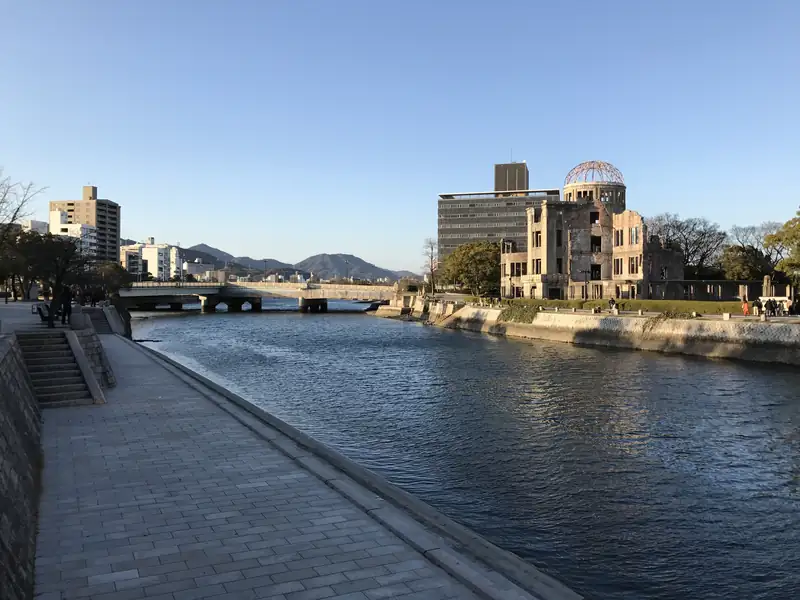
Aioi Bridge is the T-shaped bridge next to the Atomic Bomb Dome, where Hiroshima’s trams cross the river. On 6 August 1945 it was the aiming point for the atomic bomb, according to the Peace Memorial Museum’s monument guide. The bomb exploded at 8:15 a.m. about 600 m above Shima Hospital, a few hundred metres southeast of the bridge. That point on the ground, the hypocentre, is marked today by a plaque outside the hospital site, about 160 m from the Dome. You can see the bridge and the marker in 10 minutes on foot, and both are free.
Aioi Bridge
The first Aioi Bridge was built in 1932 to carry trams. Two years later it was extended with a third arm into the north end of what is now Peace Memorial Park. The T shape was rare in Japan.
The blast bent the bridge’s girders. It was replaced by the present bridge in 1983. Some of the old pillars were kept at the foot of the bridge, and girders bent by the blast are on display in the Peace Memorial Museum.
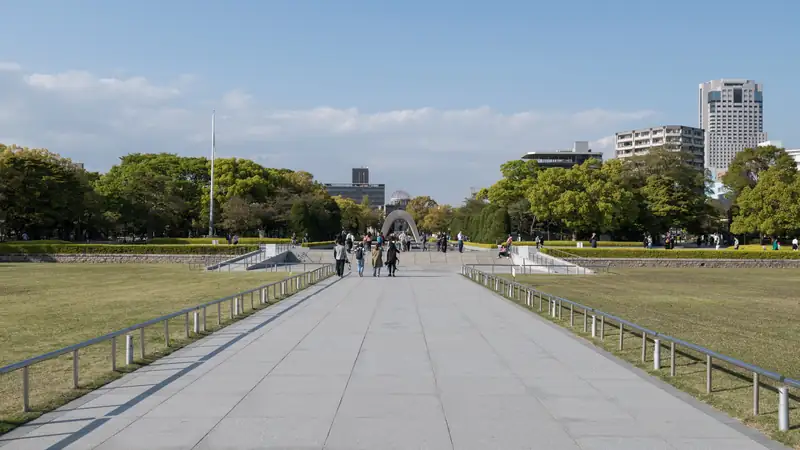
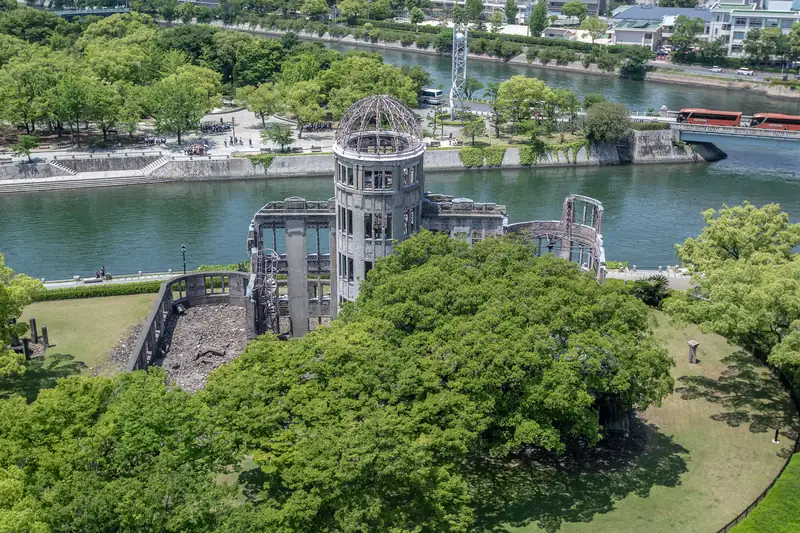
Today it is a busy city bridge, and trams cross it beside the Genbaku Dome-mae stop on the east bank, next to the Dome. From the riverside walk in the park you can see the bridge and the Dome together.
How far the bomb missed
The bomb did not explode above the bridge. It exploded above Shima Hospital, to the southeast. How far that is from the bridge depends on the source: the museum’s monument guide says about 300 m, while other accounts give about 240 m. Either way, a few hundred metres, and it is the plaque at the hospital site, not the bridge, that marks the hypocentre today.
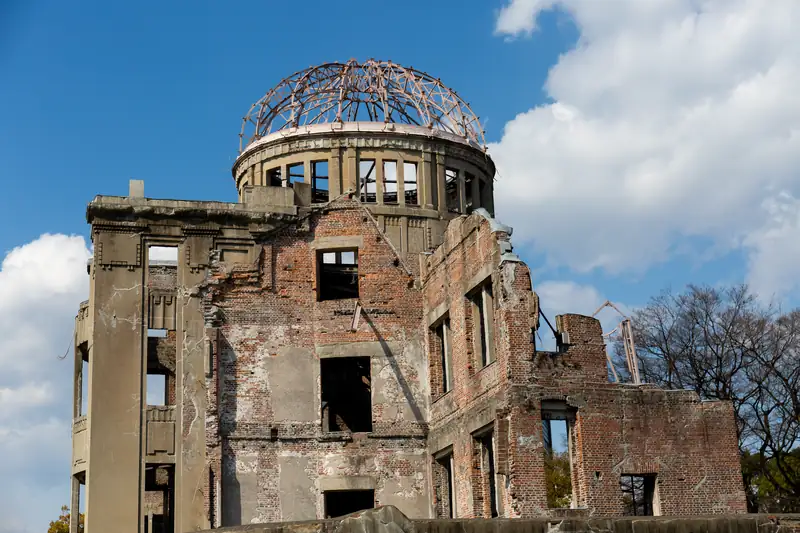
The more common mistake is about the Dome. The bomb did not explode directly above it. The City of Hiroshima says the Industrial Promotion Hall, now the Dome, stood about 160 m northwest of the hypocentre. (Some sources give 150 m.)
The hypocentre and Shima Hospital
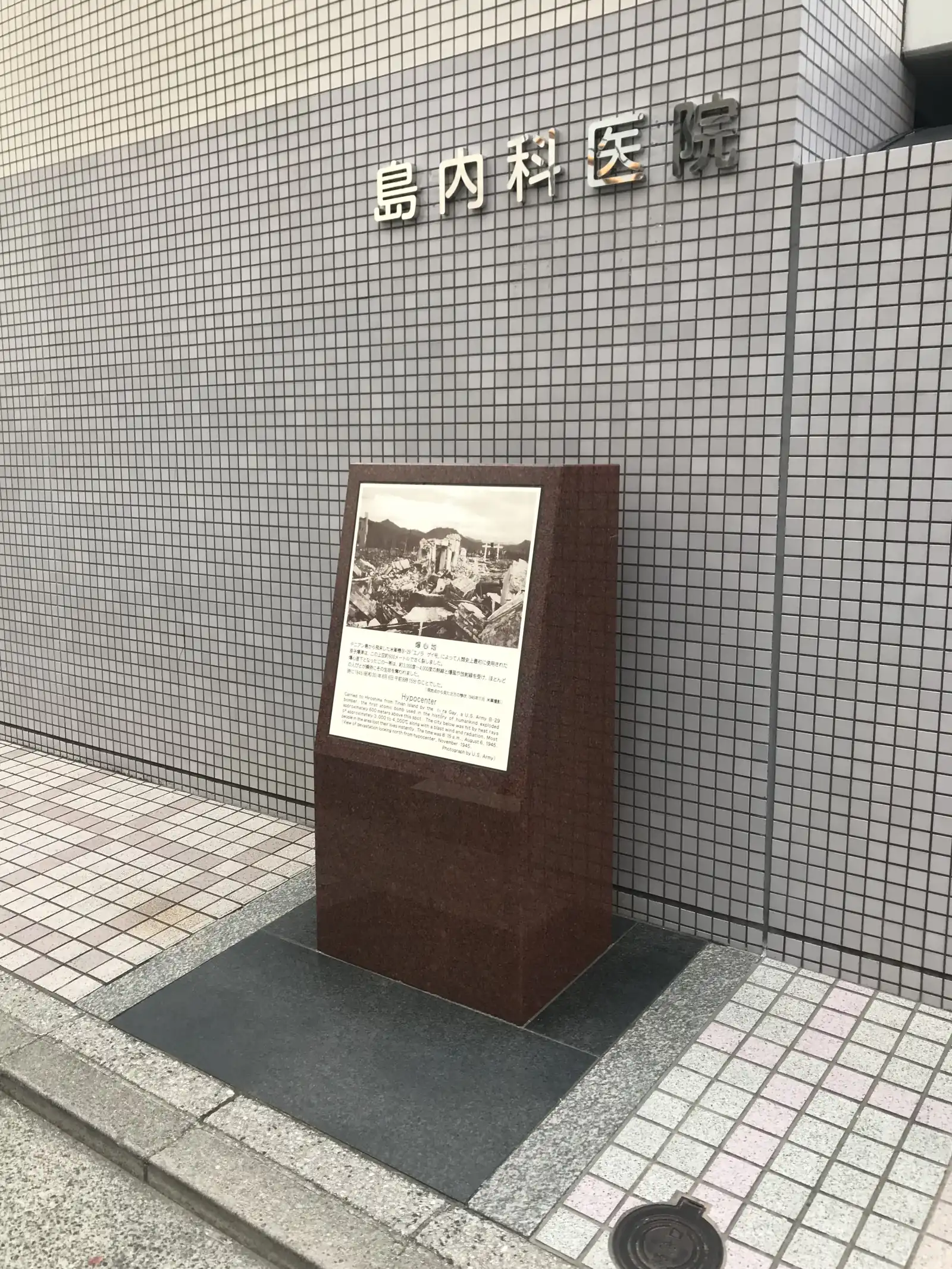
Shima Hospital opened in 1933 in the city centre. At 8:15 a.m. on 6 August 1945 the bomb exploded about 600 m above it. Around 80 patients and staff were killed; the museum gives about 75 in one place and roughly 80 in another.
The site is a clinic today. The hypocentre marker stands there: a plaque explaining what happened, with a small photograph of the area after the bombing. It is small and easy to walk past.
The clinic is a working medical building. Read the plaque, take a photograph if you wish, and keep the entrance clear for patients.
Finding the bridge and the marker (checked October 2026)
| From | To | Distance | On foot |
|---|---|---|---|
| Atomic Bomb Dome | Aioi Bridge | Next to the Dome | 1 minute |
| Atomic Bomb Dome | Hypocentre marker | About 160 m | 2 minutes |
| Hypocentre marker | Orizuru Tower | About 120 m | 2 minutes |
| Genbaku Dome-mae tram stop | Aioi Bridge | At the east end of the bridge | 1 minute |
| Peace Memorial Museum | Aioi Bridge | About 550 m in a straight line | About 10 minutes |
The marker is about 160 m southeast of the Dome, away from the river. The simplest way to find it is to search a map app for Shima Hospital.
One warning about maps: coordinates for the hypocentre printed in some older sources appear to use an old Japanese map datum. Put into a modern map app, they land several hundred metres away. Search by name instead.
A short walk that links them
A loop of about 20 minutes takes in all three places:
- Start at the Children’s Peace Monument and walk north through the park to the riverside.
- Look across the river at the Dome and Aioi Bridge.
- Cross Aioi Bridge to the east bank and the Dome.
- Walk round the Dome’s fence to its south side.
- Walk east to the hypocentre marker.
- Finish at Orizuru Tower, across the street from the Dome, if you want the view from above.
The history of the Dome explains why the building partly stood although it was so close to the hypocentre.