Hiroshima Castle: what you can visit now
Hiroshima Castle's main keep closed on 22 March 2026 because its 1958 concrete is deteriorating, so there are no keep tickets. You can still walk the moats and grounds, see the keep from outside and enter the rebuilt Ninomaru buildings for free. A new history museum in the Sannomaru opens in June 2027.
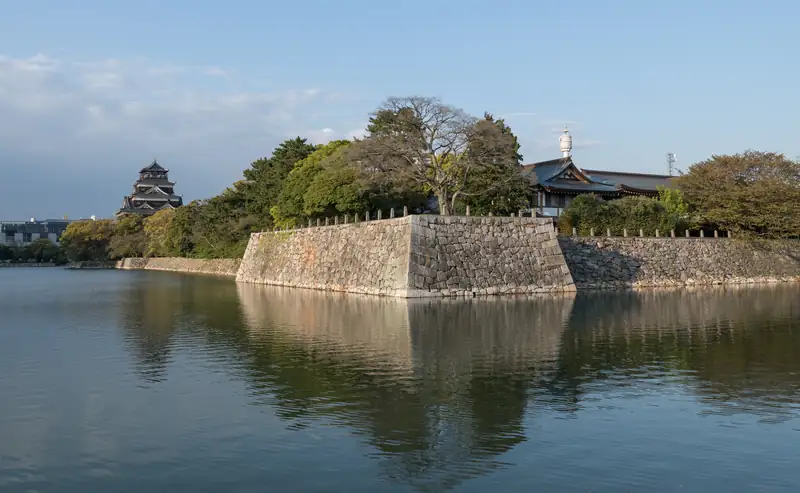
Hiroshima Castle’s main keep is closed. The City of Hiroshima shut it on 22 March 2026, after about 68 years as a museum, because the 1958 concrete has deteriorated and the facilities are old. So there are no keep tickets to buy. The grounds stay open and free: you can walk the moats, look at the keep from outside, and go into the rebuilt Ninomaru gate and turrets at no charge.
If you came for the view from the top floor, that is gone for now. If you came to see a castle that stood for 350 years, was destroyed in 1945 and was rebuilt by a city starting again, the grounds still tell that story.
What is open and what is closed
Checked October 2026, from the City of Hiroshima and the castle operator’s site:
| Part of the castle | Status | Fee |
|---|---|---|
| Main keep (tenshu) | Closed since 22 March 2026. Exterior can be viewed | None |
| Castle grounds, moats, Honmaru | Open | Free |
| Ninomaru reconstructed buildings | Open; 9:00 to 17:30 (April to September), 9:00 to 16:30 (October to March); last entry 30 minutes before closing | Free |
| Ninomaru museum shop | 9:30 to 17:00 (April to September), 9:30 to 16:00 (October to March) | |
| Sannomaru History Museum | Opens 1 June 2027 (first floor), 1 October 2027 (second floor) | Not yet published |
The Ninomaru closes from 29 to 31 December. The operator’s site also lists a closure on 8 December.
The city says there are no plans to demolish the keep. It is studying whether and how to restore it and will decide after further investigation. No reopening date exists, and anything you read about a wooden rebuild by a set year is speculation until the city announces it.
A short history of Hiroshima Castle
Mori Terumoto, the warlord who then ruled most of the Chugoku region, started building the castle in 1589 on the delta of the Ota River. According to Hiroshima Prefecture, the work took about two years. After Mori, the castle passed to the Fukushima clan and then to the Asano clan.
The original keep was designated a national treasure in 1931.
The keep collapsed in the atomic bombing of Hiroshima on 6 August 1945. The castle stands roughly 950 metres north of the Atomic Bomb Dome. Most of the castle’s other buildings had been removed in the Meiji era; the Hiroshima Culture site records that the keep, main gate and turret that remained were all destroyed by the bomb.
In 1958 the city rebuilt the keep in reinforced concrete, copying its pre-war exterior, as a venue for the Hiroshima Reconstruction Exposition. It then opened as a museum and stayed open until March 2026. The Ninomaru, the castle’s second enclosure, has also been partly reconstructed, and its gate and turrets are the buildings you can enter today.
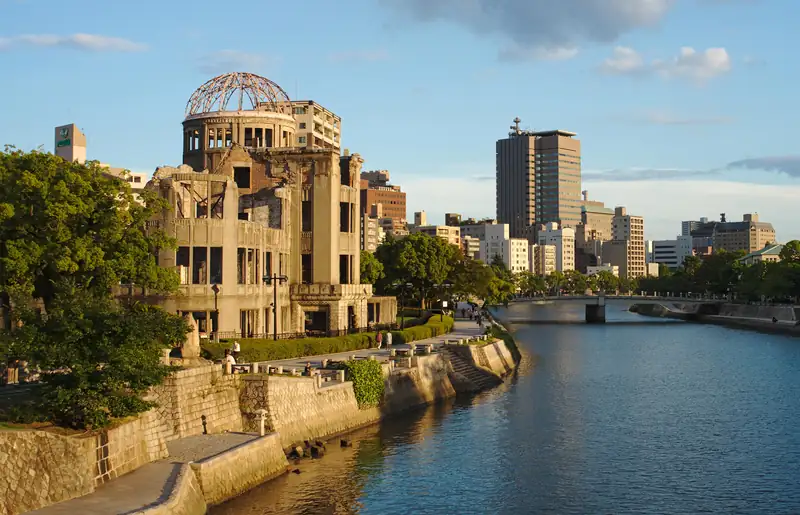
For the story of the bombing itself, start at the Atomic Bomb Dome’s history and the Peace Memorial Museum.
The A-bombed trees in the grounds
Some trees in the castle grounds survived the bombing and are on the City of Hiroshima’s register of A-bombed trees (list current as of April 2025):
| Tree | Where | Distance from the hypocentre |
|---|---|---|
| Eucalyptus | Former Ninomaru site | 740 m |
| Giant pussy willow (maruba-yanagi) | Former Ninomaru site | 740 m |
| Kurogane holly | Castle site | 910 m |
The city’s register covers surviving trees within roughly two kilometres of the hypocentre. Two of the castle’s trees stand on the former Ninomaru site, so look for them as you walk from the Ninomaru towards the keep.
How long to spend here
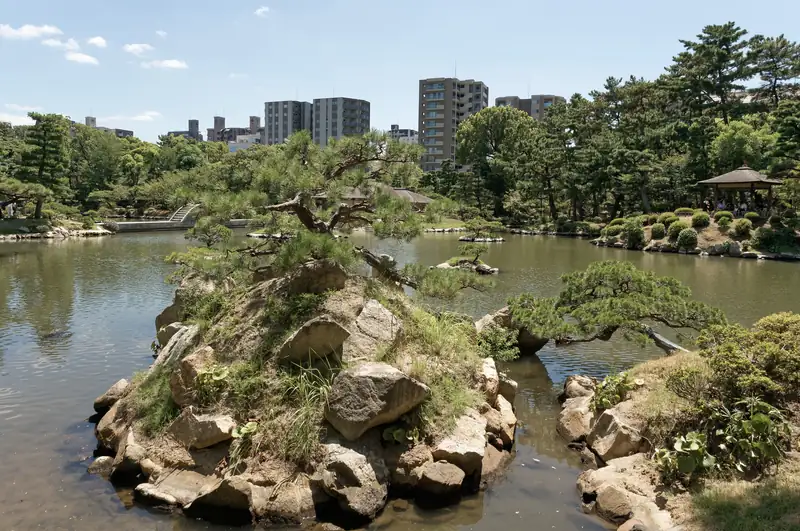
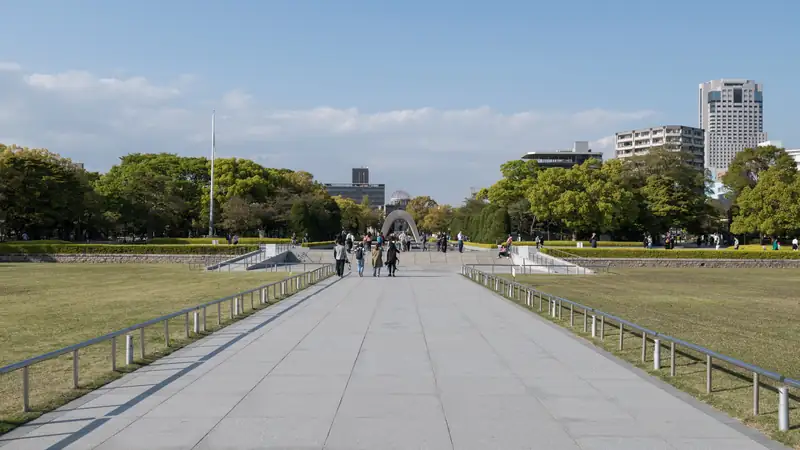
With the keep closed, 30 to 45 minutes covers the Ninomaru, a walk round the inner moat and a look at the keep from the Honmaru (the inner enclosure). It fits well between the Peace Memorial Park and Shukkeien Garden, which is about 1.3 km from the Dome and about 800 m south-east of the castle. The three make a half-day loop on foot.
The walking tour picked above begins at Gokoku Shrine and the castle to explain the city’s wartime role, then continues to the Dome and the park. Two other tours below include the castle grounds: a private walk that ends at the museum with your ticket included, and a bike tour that adds Shukkeien. None of them goes inside the keep now.
Getting to Hiroshima Castle
Checked October 2026, from the castle’s access page and JR Bus Chugoku:
| From | How | Notes |
|---|---|---|
| Atomic Bomb Dome | Walk | About 950 m north in a straight line, 15 to 20 minutes |
| Hiroshima Station | Tram 1, 2 or 6 to Kamiyacho-higashi or Kamiyacho-nishi | Use the underground passage from the stop. 240 yen adult |
| Hiroshima Station | Meipuru-pu sightseeing loop bus | Stops at Hiroshima Castle. 240 yen per ride, 600 yen day pass; Japan Rail Pass valid |
| Hiroshima Station | Bus via Godochosha-mae from south exit stops 7 or 8 | Buses via Hatchobori do not stop there |
| By car | Sannomaru car park | No parking inside the grounds. About 5 minutes’ walk to the keep; 210 yen per 30 minutes |
For the tram from the station and the loop bus timetable, see how to get to the Atomic Bomb Dome.
When to go
The Ninomaru keeps the hours above, so arrive before 16:00 between October and March if you want to go inside. On the last weekend of February, the Hiroshima Castle Oyster Festival is held in the grounds, according to the city’s official tourism site.
The keep is sometimes lit up at night; in October 2026 it was lit pink for Pink Ribbon Month.
Questions people ask about tickets
People searching for “Hiroshima Castle tickets” usually find old prices for the keep. Those no longer apply. Ignore any third-party ticket listing that still sells keep entry, and check the castle operator’s site (hiroshimacastle.jp) or the City of Hiroshima before you go. If something on this page is out of date, write to info@atomicbombdome.com.
If you have limited time in Hiroshima, put the Peace Park and the museum first. Our Hiroshima itinerary shows how to fit the castle and Shukkeien around them, and things to do in Hiroshima lists the other sights.