Hiroshima or Nagasaki: which should you visit?
Choose Hiroshima if you have limited time on the Tokyo, Kyoto and Osaka route: it is closer, and Miyajima is next door. Choose Nagasaki if you are travelling in Kyushu. Both cities have a memorial park and an atomic bomb museum with a 200 yen adult ticket. They are about three hours apart by train, so seeing both is easy.
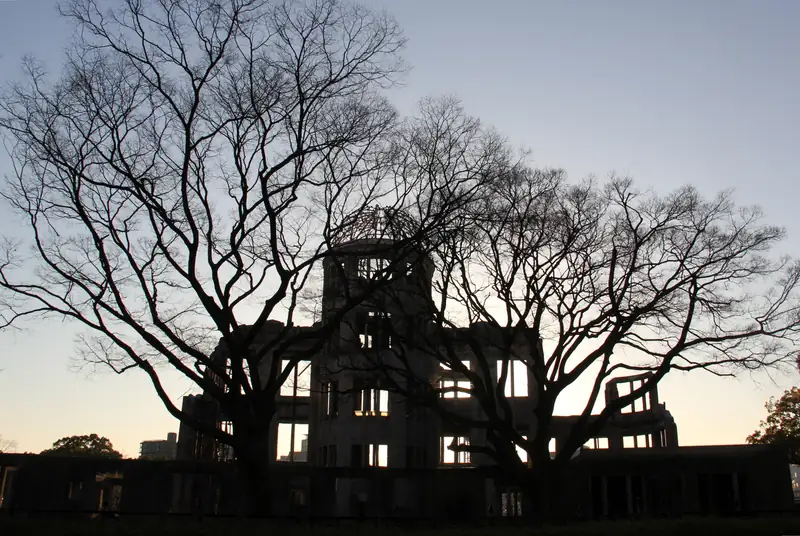
Choose Hiroshima if you are travelling between Tokyo, Kyoto and Osaka and have a day or two to spare. It is about 1.5 hours from Osaka or Kyoto by Nozomi, the Atomic Bomb Dome is a World Heritage Site, and Miyajima is close by. Choose Nagasaki if your trip already includes Kyushu. Both cities have a memorial park and an atomic bomb museum with a 200 yen adult ticket, and they are about three hours apart by train, so many travellers see both.
This is not a choice between a better and a worse memorial. Hiroshima was bombed on 6 August 1945 and Nagasaki on 9 August 1945. Each city remembers in its own way, and either visit is worth the time.
Hiroshima and Nagasaki compared
| Hiroshima | Nagasaki | |
|---|---|---|
| Date of the bombing | 6 August 1945 | 9 August 1945, 11:02 |
| Main memorial | Atomic Bomb Dome and Peace Memorial Park | Peace Park with the Peace Statue, and the hypocentre monument |
| Museum | Hiroshima Peace Memorial Museum | Nagasaki Atomic Bomb Museum |
| Adult museum ticket | 200 yen | 200 yen (aged 15 and over) |
| Museum opens | 7:30 (first hour reserved online) | 8:30 |
| From Shin-Osaka | About 1 h 25 by Nozomi | About 4 h with two changes (our estimate) |
| From Tokyo | About 4 h by Nozomi | About 7 h by train (our estimate), or fly |
| Nearby | Miyajima, Shukkeien, Hiroshima Castle | Fukuoka, about 1.5 hours by train |
| Annual ceremony | 6 August, Peace Memorial Park | 9 August, in front of the Peace Statue |
Checked October 2026. Sources are linked in the sections below. The Osaka and Tokyo times to Nagasaki add the Hiroshima to Nagasaki connection to the Nozomi times; they are estimates, not timetable figures.
Hiroshima’s memorial sites
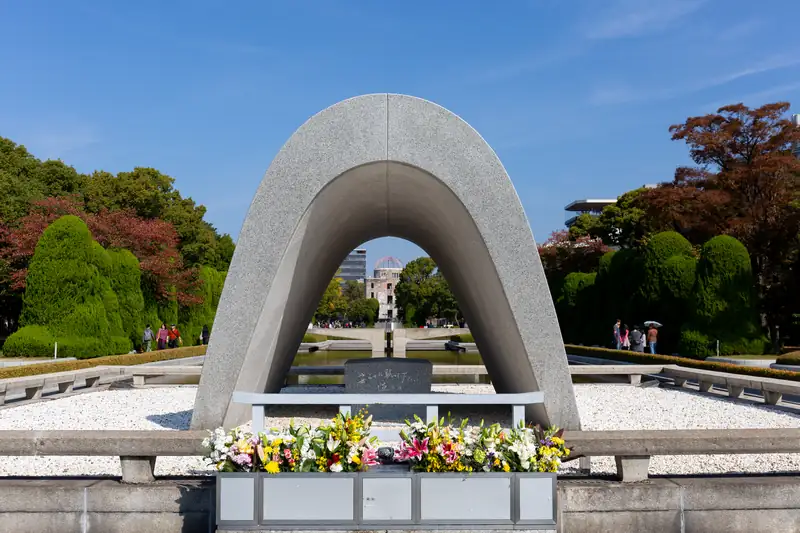
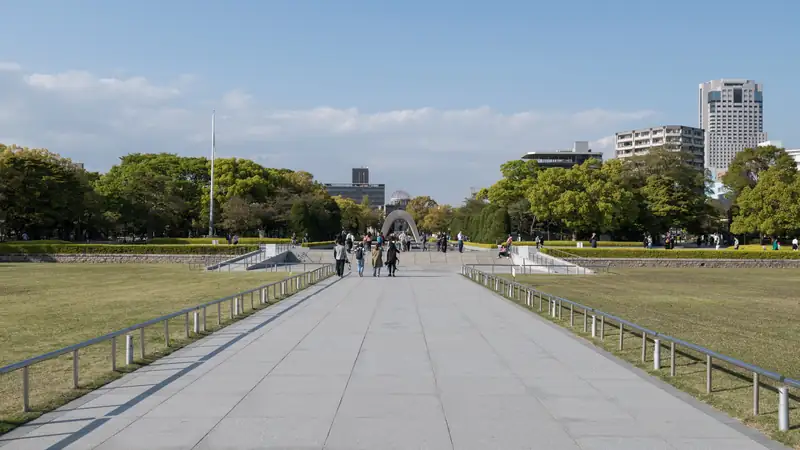
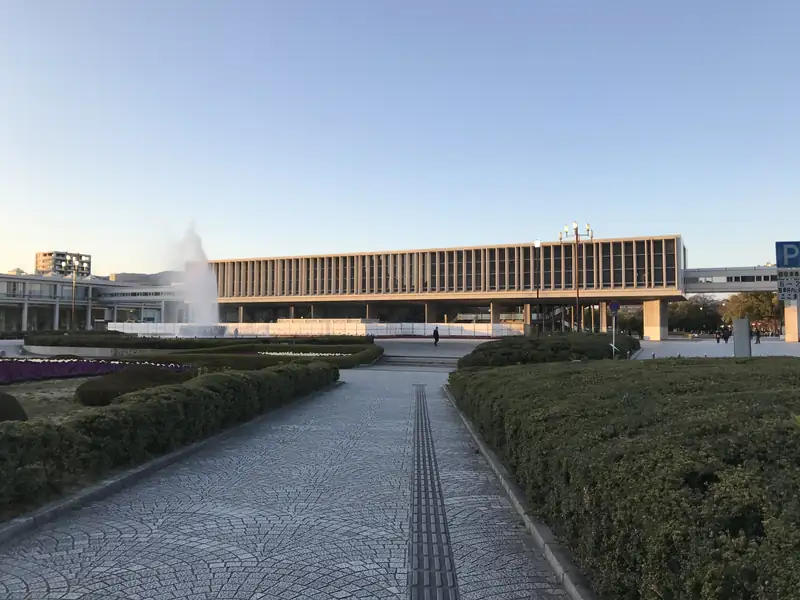
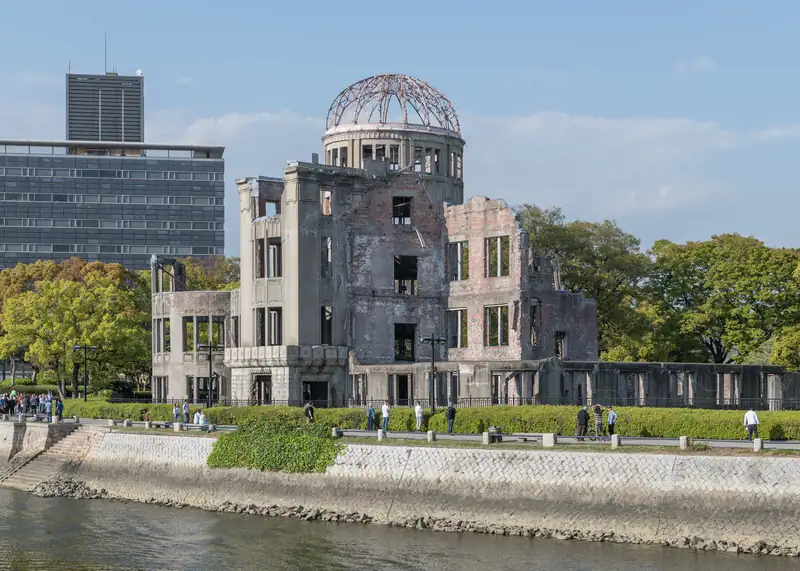
Hiroshima’s memorials are in one place in the city centre. The Atomic Bomb Dome, the ruin of the former Prefectural Industrial Promotion Hall, stands on the riverbank and was inscribed by UNESCO in 1996 as the Hiroshima Peace Memorial (Genbaku Dome). Across the river, the Peace Memorial Park runs south on one line through the Children’s Peace Monument and the Cenotaph to the Peace Memorial Museum.
The museum charges 200 yen for adults and opens at 7:30, with the first and last hour by online reservation (museum hours). A free English talk by a Legacy Successor, who passes on a survivor’s account, runs at 13:00 daily. Our museum tickets guide has the details.
Everything is walkable from the Genbaku Dome-mae tram stop, and the whole visit fits into half a day.
Nagasaki’s memorial sites
Nagasaki’s sites are in the Urakami district, north of the city centre, and spread over a short walk between three places.
Peace Park. The park’s centrepiece is the Peace Statue by the local sculptor Seibo Kitamura, completed in 1955. It is about 9.7 m tall; the inscription explains that the right hand points to the threat of the atomic bomb, the left hand stands for peace and the face prays for the victims. The city holds its Peace Memorial Ceremony in front of it every 9 August (City of Nagasaki).
The hypocentre. The bomb exploded at 11:02 on 9 August 1945, about 500 m above the spot now marked by a monument. In front of it, a box holds the register of names of those who died. A layer of earth from the time of the bombing, with roof tiles, bricks and melted glass, is preserved on the site (same source).
Nagasaki Atomic Bomb Museum. The museum is on the hill above the hypocentre. Admission is 200 yen for anyone aged 15 and over, and high school students and younger go in free with a student ID. Group rates were abolished, so everyone pays the same. It opens at 8:30 and closes from 29 to 31 December (Nagasaki Atomic Bomb Museum). The official site does not show a closing time; an archived listing gives 17:30 from September to April and 18:30 from May to August, so check before you go.
From September 2026 to about March 2027 the museum is renewing its permanent exhibition. Parts of several sections are screened off in stages, but the museum stays open and most of the area with the atomic bomb artefacts remains on show (exhibition notice).
Getting there: from JR Nagasaki Station, take the tram towards Akasako and get off at the Atomic Bomb Museum stop, about 5 minutes’ walk from the museum (museum access). The City of Nagasaki puts the Peace Park stop about 10 minutes from the station by tram, with a 3-minute walk.
Getting between Hiroshima and Nagasaki
The rail route has three legs:
- Hiroshima to Hakata on the Sanyo Shinkansen.
- Hakata to Takeo-Onsen on the Relay Kamome limited express.
- Takeo-Onsen to Nagasaki on the Nishi-Kyushu Shinkansen. The two trains meet on opposite sides of the same platform at Takeo-Onsen.
Rail booking sites list the fastest connection at about 2 hours 45 minutes; we could not confirm a total on a JR page, so allow about three hours. The Hakata to Nagasaki section alone takes about 1 hour 30 minutes.
With a Japan Rail Pass, take a Sakura or Hikari to Hakata. The pass does not cover Nozomi or Mizuho trains without the extra special ticket (JR Pass routes).
How to see both
A two-city plan that works for most travellers:
- Days 1 and 2, Hiroshima: the Dome, the Peace Park and the museum on the first day; Miyajima on the second. See our Hiroshima itinerary and where to stay.
- Day 3, travel to Nagasaki: leave Hiroshima mid-morning and spend the afternoon at the Peace Park and the hypocentre.
- Day 4, Nagasaki: the Atomic Bomb Museum in the morning, then the rest of the city.
Do not try to see both museums on the same day. Each needs at least 1.5 hours, and most people want time afterwards.
Which to choose if you can only see one
- Short trip on the Tokyo, Kyoto and Osaka route: Hiroshima. It works as a day trip from Osaka or from Kyoto.
- Travelling in Kyushu or flying into Fukuoka: Nagasaki.
- You want a second sight in the same trip: Hiroshima, for Miyajima and Itsukushima Shrine.
Still deciding whether to go at all? Read is Hiroshima worth visiting.