The Flame of Peace and the Cenotaph
The Flame of Peace and the Cenotaph for the A-bomb Victims stand together at the centre of Hiroshima's Peace Memorial Park. The Cenotaph, dedicated in 1952, shelters a register of 353,639 names of people who died of the bombing over the years. The flame, lit in 1964, is to burn until nuclear weapons are gone.
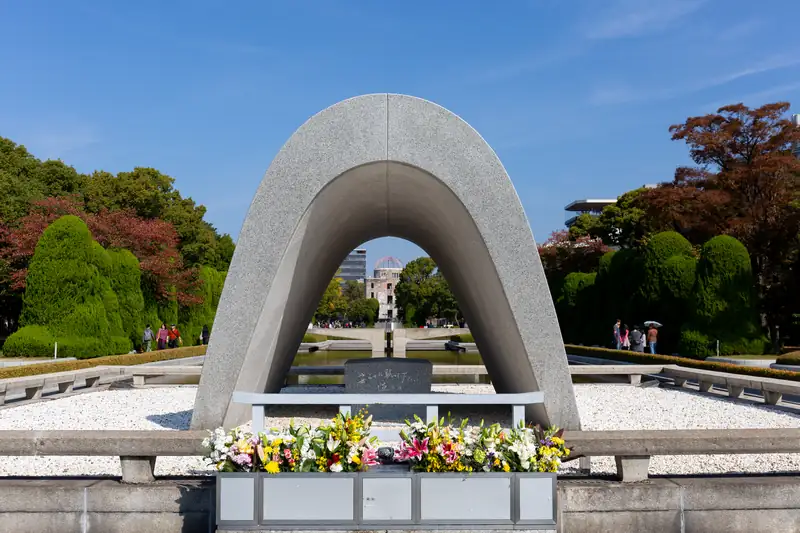
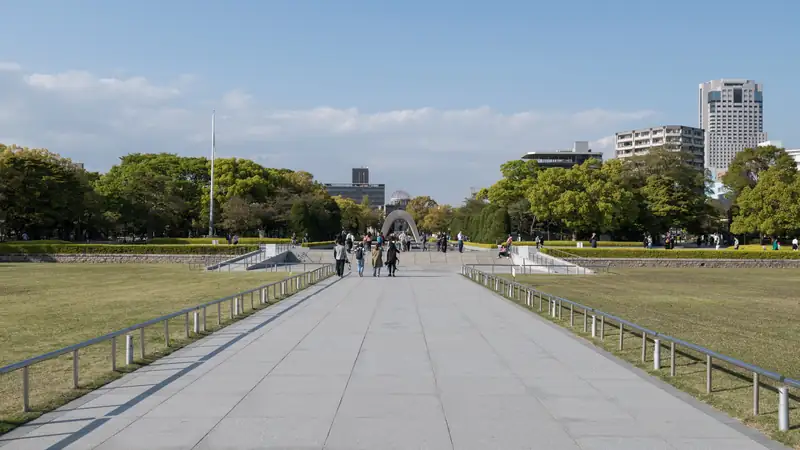
The Flame of Peace and the Cenotaph for the A-bomb Victims stand a few metres apart at the centre of Hiroshima’s Peace Memorial Park, on the line that runs from the museum to the Atomic Bomb Dome. The Cenotaph, dedicated on 6 August 1952, is an arch over a stone chest that holds the register of names of those who died because of the bombing. The Flame of Peace, lit on 1 August 1964, burns in the Pond of Peace just to the north. Both were designed by Kenzo Tange.
The Cenotaph
Its official name is the Memorial Monument for Hiroshima, City of Peace. Most visitors know it as the Cenotaph.
Tange shaped the arch on haniwa, the ancient clay models of houses found in Japanese burial mounds. The idea was a roof to shelter the souls of the dead. Under it sits a stone chest. Inside are the volumes of the register of names.
The register of names
The register lists people who died of the atomic bombing, regardless of nationality. Names are added when relatives apply, and every year on 6 August the names of those confirmed in the past year are placed in the chest at the start of the Peace Memorial Ceremony.
After 4,393 names were added on 6 August 2026, the register held 353,639.
That number is different from the death toll of 1945. It covers everyone who died of the bombing at any time, including survivors who died years or decades later. The official estimate for 1945 is about 140,000 deaths by the end of that December; the history page explains the range.
The inscription
The inscription on the Cenotaph reads:
安らかに眠って下さい 過ちは繰返しませぬから
The official English translation reads: “Let all the souls here rest in peace; For we shall not repeat the evil.”
The Japanese has no stated subject. It does not say who “we” are, or whose mistake it was, and readers have argued over that gap. Some English readers take “we” to mean the Japanese, which is not how the city reads it.
The City of Hiroshima’s position is that the words are a pledge by all people to pray for the victims and never repeat the error of war. To explain this, the city has put up boards by the Pond of Peace in eight languages: Japanese, English, French, German, Russian, Italian, Chinese and Korean.
The Flame of Peace
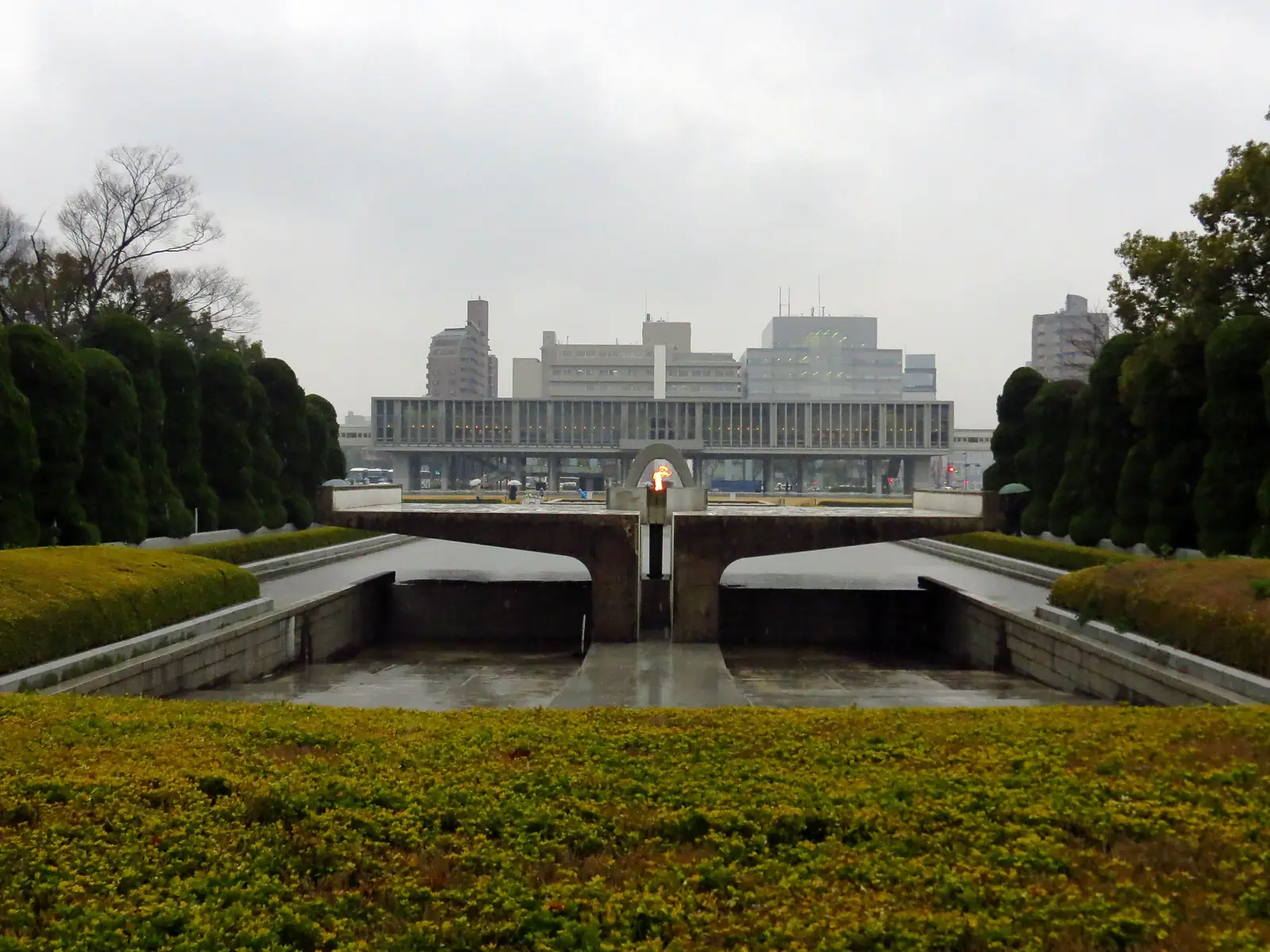
The flame was lit on 1 August 1964. Tange designed its base as two hands pressed together at the wrists, palms open to the sky. The museum’s monument guide says the shape remembers victims who died wanting water. The flame is meant to burn until all nuclear weapons have disappeared from the earth.
In 1994 it lit the flame of the Asian Games held in Hiroshima.
The line of sight to the Dome
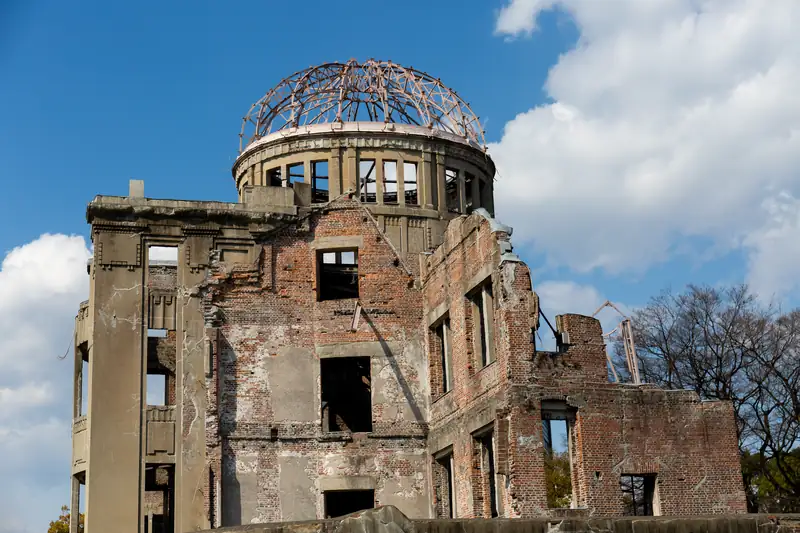
Tange planned the park around one axis. The museum’s main building, the Cenotaph and the Dome sit on it, and from in front of the Cenotaph you see the Dome framed in the arch, with the Flame of Peace and the length of the park between.
The view works best from just south of the Cenotaph, on the central path.
Visiting
The Cenotaph and the flame are about 300 m south of the Dome, a five-minute walk, and a short walk north of the museum.
At a glance (checked October 2026)
| Item | Detail |
|---|---|
| Entry | Free, open-air |
| Cenotaph dedicated | 6 August 1952 |
| Flame of Peace lit | 1 August 1964 |
| Designer | Kenzo Tange |
| Names in the register | 353,639 after 6 August 2026 |
| From the museum | A few minutes north on the central path |
| From the Dome | About 300 m south, 5 minutes |
People come to the Cenotaph to pray and lay flowers. A few courtesies:
- Keep your voice low, and keep children close.
- Photographs are fine. If people are praying in front, step aside and wait.
- If you want to pay respects, a short bow or a moment of silence is enough.
- On 6 August the Peace Memorial Ceremony is held here, and park entry is restricted from 5:00 to 9:00.
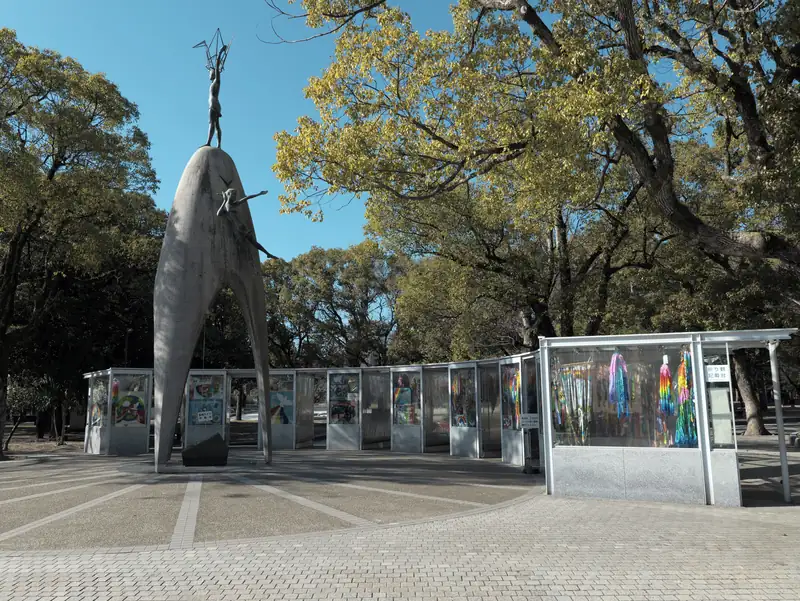
From the Cenotaph, walk north past the flame to the Children’s Peace Monument and on to the Dome.