Things to do in Hiroshima
Start with the Atomic Bomb Dome, the Peace Memorial Park and the Peace Memorial Museum, which together need half a day. Then add Miyajima and Itsukushima Shrine, Shukkeien Garden, the grounds of Hiroshima Castle (its keep closed in March 2026), Mitaki Temple and an okonomiyaki dinner. Most visitors spend two days.
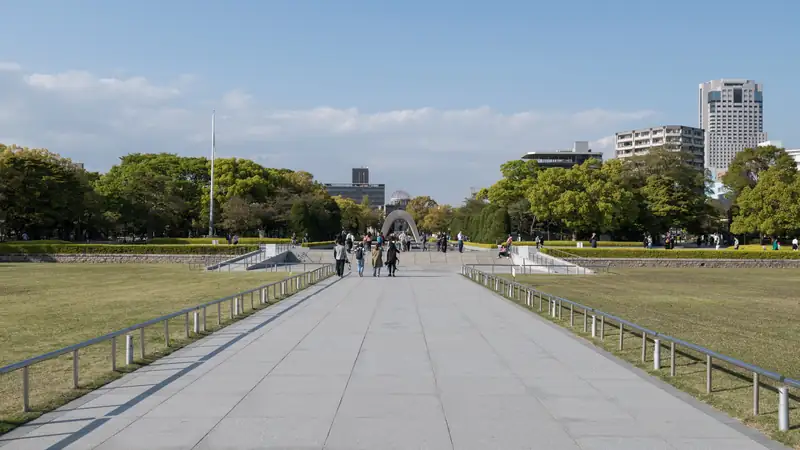
The first things to do in Hiroshima are the Atomic Bomb Dome, the Peace Memorial Park and the Peace Memorial Museum. They stand together in the city centre, and half a day covers them. After that, most visitors go to Miyajima for Itsukushima Shrine and its torii in the sea, and fit in Shukkeien Garden, the grounds of Hiroshima Castle and an okonomiyaki dinner. Mitaki Temple is a quiet extra. Note that Hiroshima Castle’s keep closed in March 2026.
This page links every guide to the wider city. The sights are listed in the order we would see them.
At a glance
Checked October 2026:
| Sight | Cost | Time to allow | Guide |
|---|---|---|---|
| Atomic Bomb Dome | Free, seen from outside | 20 to 30 minutes | Atomic Bomb Dome |
| Peace Memorial Park | Free | 1 to 2 hours | Peace Memorial Park |
| Peace Memorial Museum | 200 yen adult | 1.5 to 2 hours | Peace Memorial Museum |
| Aioi Bridge and the hypocentre | Free | 15 minutes | Aioi Bridge |
| Orizuru Tower | 2,200 yen adult | 45 minutes | Orizuru Tower |
| Shukkeien Garden | 350 yen adult | 45 minutes to 1 hour | Shukkeien Garden |
| Hiroshima Castle | Grounds and Ninomaru free; keep closed | 30 to 45 minutes | Hiroshima Castle |
| Miyajima | Shrine 300 yen; ferry 200 yen + 100 yen tax | A full day | Miyajima |
| Okonomimura | Pay per meal | An evening | Okonomiyaki |
| Mitaki Temple | See guide | About 2 hours from the station | Mitaki Temple |
1. The Atomic Bomb Dome
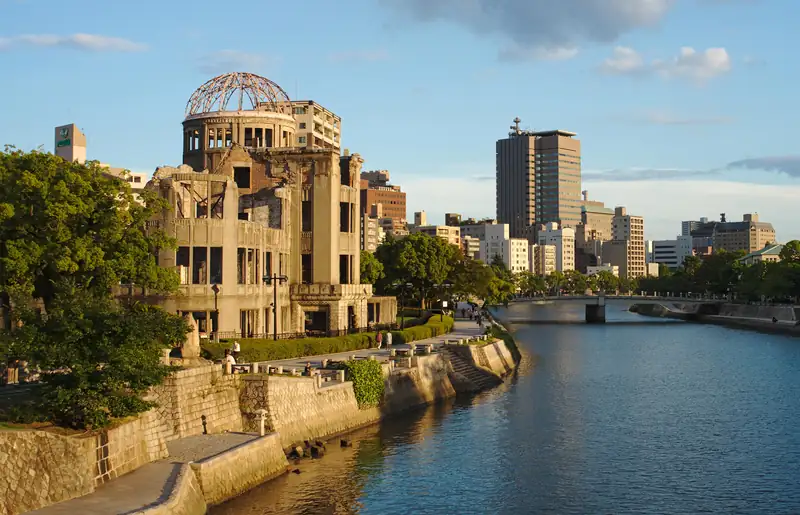
The Dome was the Hiroshima Prefectural Industrial Promotion Hall. It stood about 160 metres from the hypocentre of the atomic bombing on 6 August 1945, and its shell is kept as it was left. UNESCO inscribed it in 1996 as the Hiroshima Peace Memorial (Genbaku Dome). You cannot go inside, as it has been fenced since 1962, but you can walk all the way round it for free.
Get off the tram at Genbaku Dome-mae. For directions from the station, see how to get to the Atomic Bomb Dome, and for its story, the Dome’s history.
2. The Peace Memorial Park
South of the Dome, across the river, the park holds the memorials most visitors come to see. They include the Children’s Peace Monument, where paper cranes are offered in memory of Sadako Sasaki, the Cenotaph and the Flame of Peace. Entry to the park is free. Please keep your voice low at the Cenotaph and the Memorial Mound, which are places of mourning.
Cranes can be left in the booths around the Children’s Peace Monument from 8:45 to 17:00 (6:00 to 20:00 on 6 August).
3. The Peace Memorial Museum
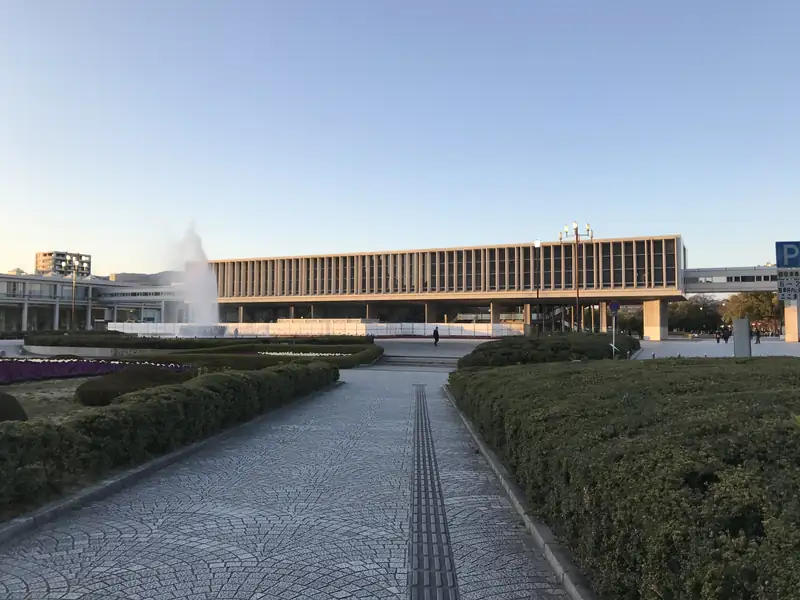
The museum tells what happened on 6 August 1945 and to the people who lived through it. Adult entry is 200 yen. From March to July and September to November it opens 7:30 to 19:00. It is busiest from 11:00 to 15:00, and the museum recommends buying tickets online. Allow 1.5 to 2 hours.
Every day at 13:00, a Legacy Successor gives a free one-hour talk in English in the East Building, retelling a survivor’s account. See museum tickets and hours for the full table, and hibakusha for more on survivors’ testimony.
4. Aioi Bridge, the hypocentre and Orizuru Tower
Two minutes’ walk from the Dome, a plaque at the Shima Hospital site marks the hypocentre, the point on the ground below the explosion. The T-shaped Aioi Bridge next to the Dome was the bomb’s aiming point.
Orizuru Tower, across the street east of the Dome, has a rooftop deck that looks down on the Dome and the park. It is a commercial attraction, not part of the memorial. Adult entry is 2,200 yen, and it is free for holders of an Atomic Bomb Survivor’s Certificate.
5. Shukkeien Garden
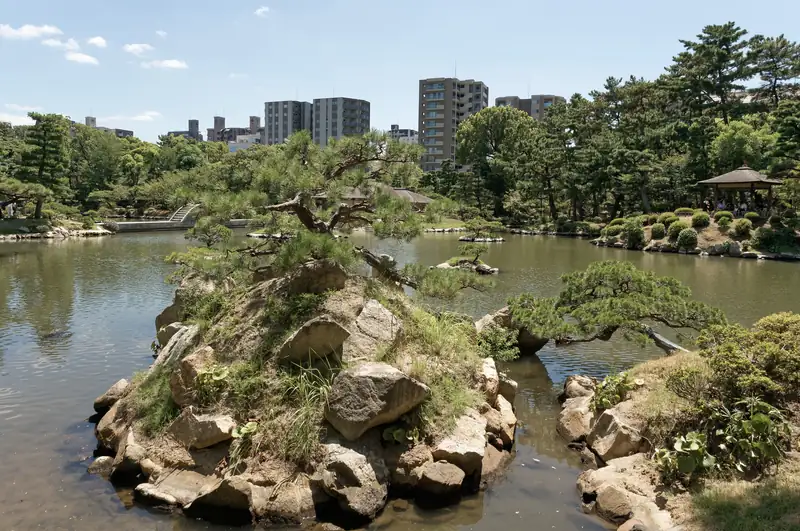
Shukkeien is a walking garden around a pond, made in 1620 for the Asano lords and about 1.3 km from the Dome. The 1945 bombing destroyed every building in it except the stone bridge. Three of its trees survived and are on the city’s register of A-bombed trees. Entry is 350 yen for adults, free for high school students and younger. It opens at 9:00.
6. Hiroshima Castle
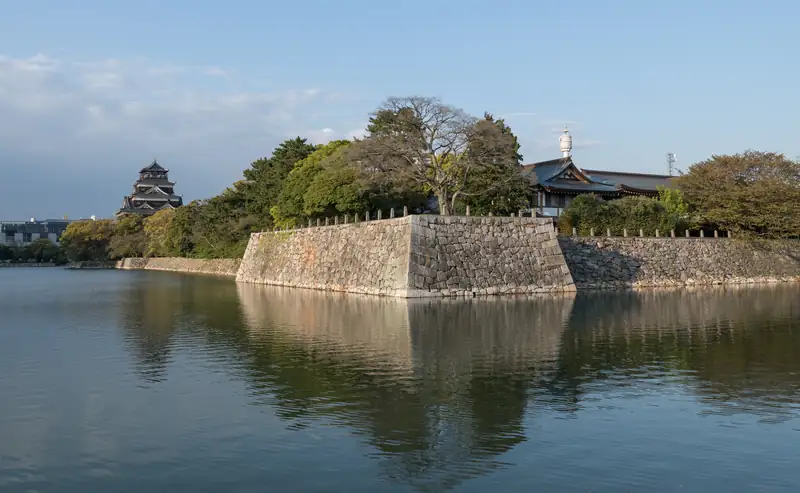
The castle was begun in 1589 by Mori Terumoto. The keep collapsed in the atomic bombing and was rebuilt in concrete in 1958. The keep closed on 22 March 2026 because that concrete has deteriorated, and no reopening date exists. The grounds, the moats and the rebuilt Ninomaru are still open and free. Details are in our Hiroshima Castle guide.
7. Miyajima and Itsukushima Shrine
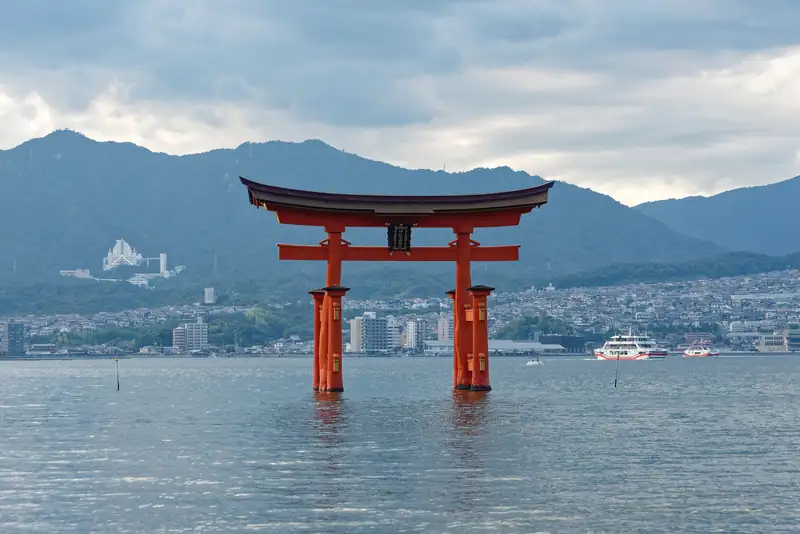
Miyajima is the main trip out of the city. Itsukushima Shrine, founded in 593 and rebuilt in its present form in 1168, stands over the sea, and its torii appears to float at high tide. Shrine entry is 300 yen. The Mt Misen ropeway costs 2,000 yen return and its last car down leaves at 16:30.
Getting there takes about 26 minutes by JR train to Miyajimaguchi plus a 10-minute ferry, or 45 minutes on the Aqua Net boat from the Peace Park. See Hiroshima to Miyajima for fares.
8. Eat okonomiyaki and oysters
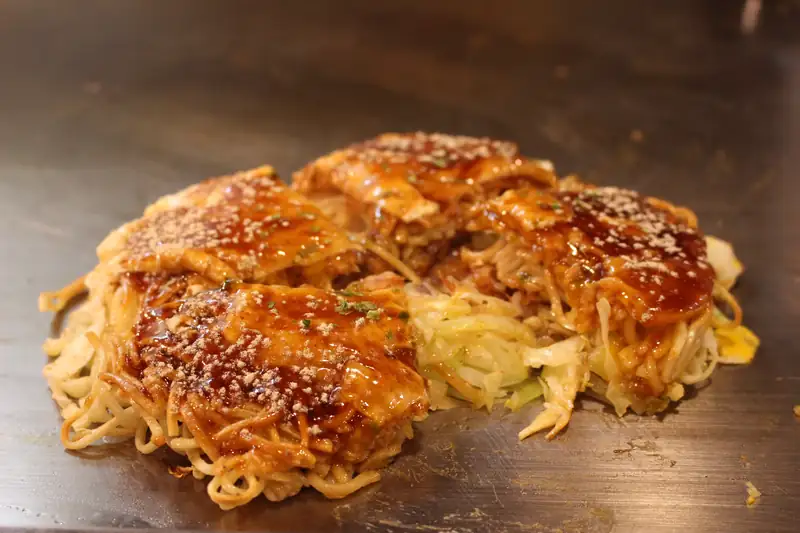
Hiroshima okonomiyaki is layered on the griddle with fried noodles. Okonomimura in Shintenchi has 23 restaurants on three floors, a few minutes’ walk from Hatchobori tram stop. Oysters are the winter food: Hiroshima Prefecture grows more than half of Japan’s farmed oysters. Read more in okonomiyaki in Hiroshima.
9. Mitaki Temple
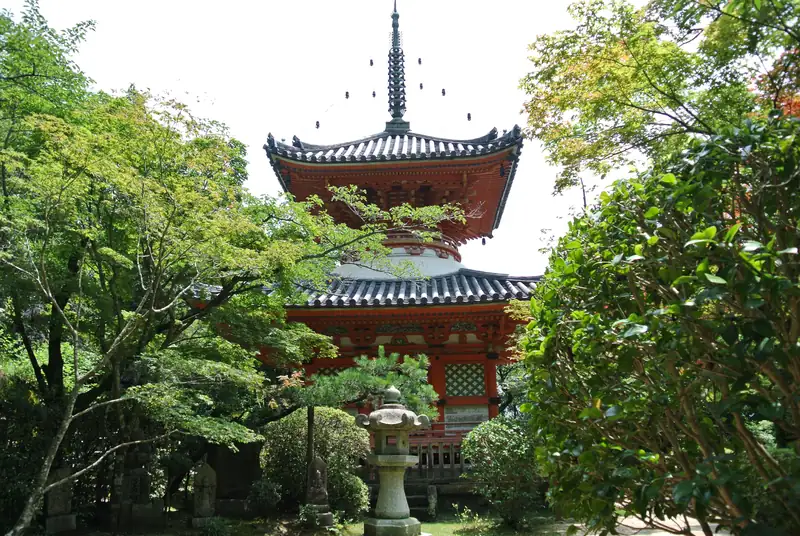
Mitaki Temple is a wooded hillside temple three stops from Hiroshima Station on the JR Kabe Line, then a 15 to 20 minute walk uphill. It has three waterfalls and hundreds of stone Buddhas. It is about 3.2 km from the hypocentre, and its vermilion pagoda was brought here in 1951 for a memorial service for those who died in the bombing.
10. Be in Hiroshima on 6 August
Each year on 6 August, the city holds the Peace Memorial Ceremony in the park from 8:00. Entry to the park is restricted early in the morning. If your dates fall then, read Hiroshima Day before you plan anything else.
Getting around
Most of the city sights above are within walking distance of the Dome. For the rest, the tram has a flat fare of 240 yen for adults, and the meipuru-pu sightseeing loop bus stops at the castle, the Dome and the Peace Park (600 yen day pass; Japan Rail Pass valid).
Where to go next
- Planning the days: Hiroshima itinerary
- Choosing a base: where to stay in Hiroshima
- Seeing it with a guide: best Hiroshima tours