Hiroshima today
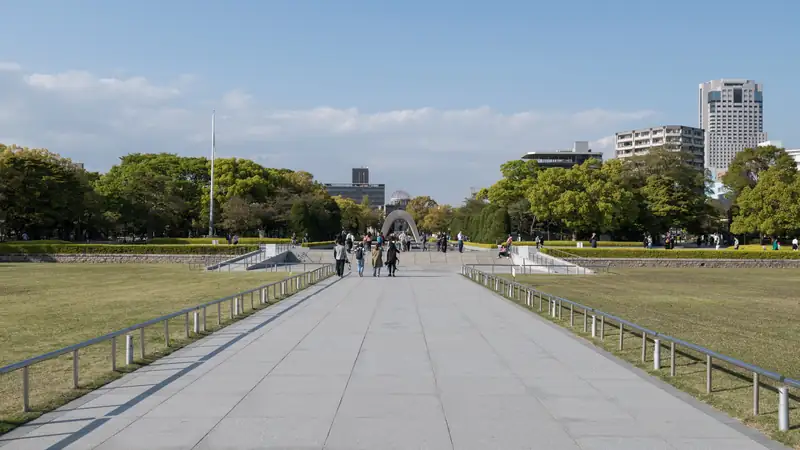
Hiroshima today is a modern city of about 1.17 million people in western Japan. It is not radioactive: the City of Hiroshima says radiation there is at the same extremely low background level found anywhere on Earth and has no effect on health. The city was rebuilt after 1945 around Peace Memorial Park.
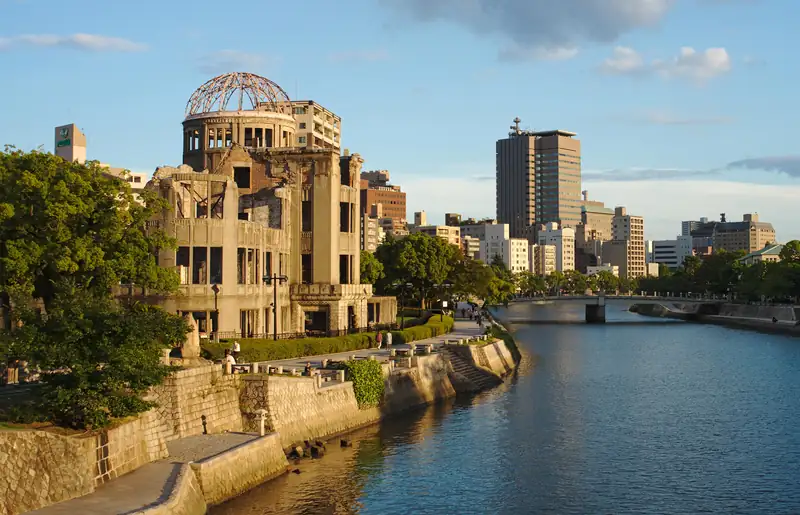
Hiroshima today is a city of about 1.17 million people, rebuilt on the same ground as the city destroyed on 6 August 1945. It has trams, shopping arcades, a baseball team, rivers lined with walking paths, and a large park in the middle that is also a memorial. It is not radioactive. The City of Hiroshima says the radiation there now is on a par with the extremely low background radiation present anywhere on Earth, and that it has no effect on the human body.
Is Hiroshima still radioactive?
No. This is the city’s own answer, and it is the one most visitors are looking for.
The bomb released most of its radiation in two forms. Initial radiation came at the moment of the explosion and did the most harm to people. Residual radiation followed, and it fell away fast. According to the city, about 80 percent of the residual radiation was released within 24 hours. A person standing at the hypocentre a day after the bombing would have received about a thousandth of the dose of the first moments; a week later, about a millionth.
People have lived, worked and raised families in Hiroshima since 1945, and the city grew past its pre-war size within a few decades.
The bomb’s effects on the people who were exposed are another matter. Japan gives survivors who hold a certificate medical support under a national law. The hibakusha page covers who they are and how to hear their testimony.
The rebuilt city
Hiroshima did not stay empty for long. Its rebuilding happened in stages, some of them within days.
Numbers that show the change (checked October 2026)
| Year | Hiroshima City |
|---|---|
| 1942 | Pre-war peak population: 419,182 |
| 1945 | Lowest post-war population: 137,197 |
| 1949 | Hiroshima Peace Memorial City Construction Law passed |
| 1954 | Peace Memorial Park completed |
| 1955 | Peace Memorial Museum opens |
| 1975 | Sanyo Shinkansen line opens through Hiroshima |
| 1980 | Becomes a government-designated city with seven wards |
| 1985 | Population passes one million (1,024,072) |
| 2020 | Census population: 1,200,754 |
| 2025 | Resident register, 30 September: 1,168,848 |
Sources: City of Hiroshima statistical profile; Peace Memorial Museum monument guide.
The trams
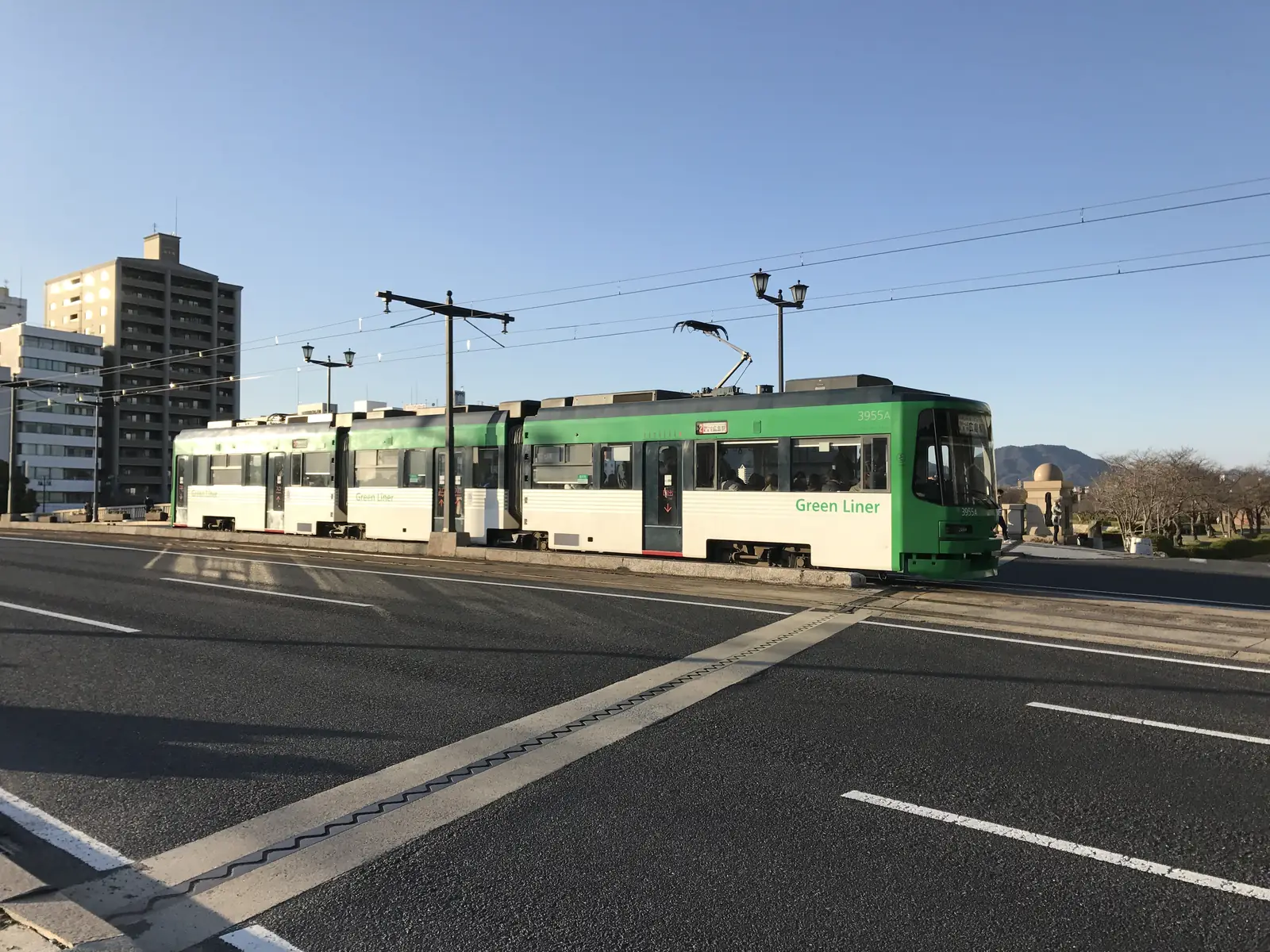
The bombing destroyed 108 of the city’s 123 streetcars. Some of the surviving cars were running again three days later, on 9 August 1945. Two trams that were damaged in the bombing, numbers 651 and 652, built in 1942, were still in service when the Japan Tourism Agency described them, and the operator, Hiroden, has said it intends to keep at least one running for as long as it can. Today the trams carry visitors from Hiroshima Station to the Genbaku Dome-mae stop for a flat ¥240. See how to get to the Atomic Bomb Dome.
A law for a city of peace
The Hiroshima Peace Memorial City Construction Law is dated 6 August 1949, four years to the day after the bombing. It set out the rebuilding of Hiroshima as a city of peace. Kenzo Tange’s winning design for Peace Memorial Park was built on the destroyed Nakajima district. The park was completed in 1954 and the museum opened in 1955.
Trees that came back
The two Chinese parasol trees now near the museum stood 1.3 km from the hypocentre. They were burned and stripped, and they budded again the following spring. They were moved to the park in 1973, and their seeds have been planted around the world. People in Hiroshima call them the A-bombed Phoenix trees.
Before and after
Searches for Hiroshima “before and after” usually turn up photographs of the destroyed city. A truer comparison is between the city as it was before 1945 and the city now.
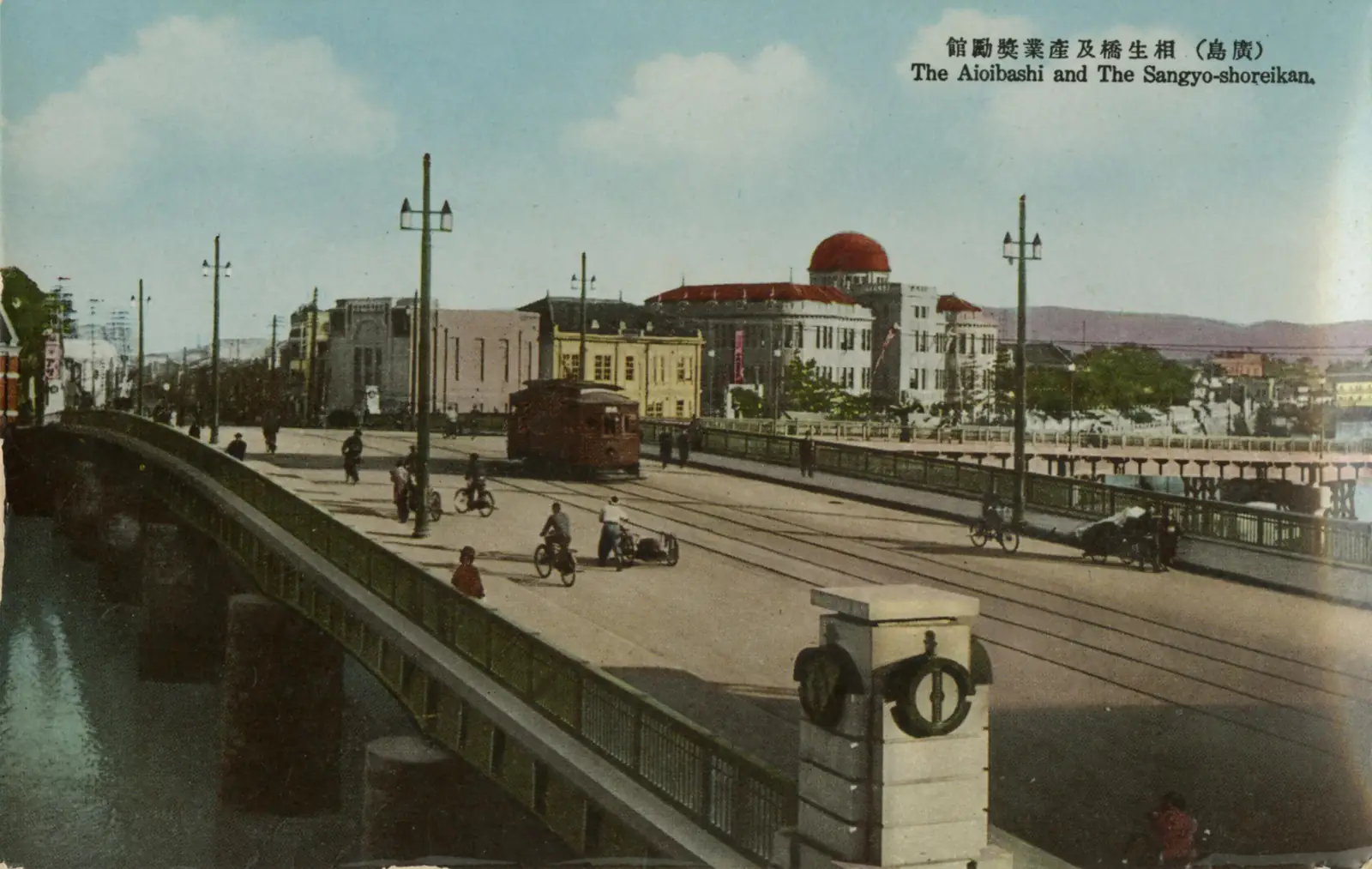
Aioi Bridge and the Industrial Promotion Hall on a postcard from 1933 to 1945. Public domain, via Hiroshima City Archives.
Before the war, the riverside around the Industrial Promotion Hall was a busy commercial area. Nakajima, now the park, had seven neighbourhoods and about 6,500 residents. The hall itself, now the Atomic Bomb Dome, was a landmark whose reflection in the river people knew well.
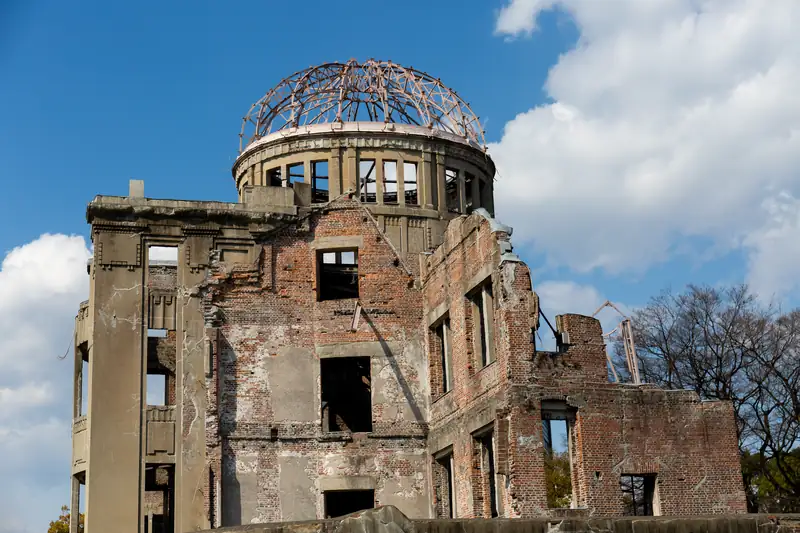
Today the same riverbank is a park. Trams still cross Aioi Bridge, which was rebuilt in 1983. The Dome is still as it was left in 1945, kept on purpose by a 1966 decision of the city council, and everything around it is new. The history of the Dome tells that story in full.
What Hiroshima is like to visit now
Most visitors spend a day or two. They come for Peace Memorial Park, the Peace Memorial Museum and the Dome, and many add a trip by train or tram and ferry to Miyajima. The city is easy to get around, and the centre is compact enough to walk.
Some practical points:
- The Peace Memorial Museum had 2,580,926 visitors in the year to March 2026, a record, and 945,618 came from overseas. Book an early or late slot online to avoid the midday queue.
- The keep of Hiroshima Castle, a 1958 concrete rebuild of the original destroyed in the bombing, has been closed since 22 March 2026. The grounds are open.
- Okonomiyaki, the layered pancake of cabbage, noodles and pork, is the city’s best-known food.
- Shukkeien is a Japanese garden about 1.3 km from the Dome.
Visitors from every country, including the United States, come in large numbers. The usual courtesy applies at the memorials: speak quietly at the Cenotaph, and leave paper cranes at the Children’s Peace Monument rather than elsewhere. Is Hiroshima worth visiting answers the common questions about etiquette.
How the city remembers
Remembrance is part of daily life here, not a separate attraction. The Peace Clock Tower near the Dome chimes at 8:15 every morning. Every 6 August the city holds the Peace Memorial Ceremony in front of the Cenotaph, and the mayor reads the city’s Peace Declaration. The museum runs daily talks by people who carry on survivors’ stories, and people bring or post about 10 million paper cranes a year to the Children’s Peace Monument.