Sadako Sasaki and the paper cranes
Sadako Sasaki was two years old when the atomic bomb fell on Hiroshima in 1945. Ten years later she was diagnosed with leukaemia, and in hospital she folded paper cranes, passing 1,000 by the end of August 1955 and carrying on. She died on 25 October 1955, aged 12. Her classmates raised money for the Children's Peace Monument.
Sadako Sasaki was a Hiroshima schoolgirl who was two years old when the atomic bomb was dropped on her city on 6 August 1945. Ten years later, in sixth grade, she became ill. She was admitted to hospital with leukaemia in February 1955, and that August she began folding paper cranes. The Hiroshima Peace Memorial Museum says she had 1,000 by the end of the month and kept folding. She died on 25 October 1955, aged 12. Her classmates then started the campaign that built the Children’s Peace Monument, and her cranes became a sign of the wish for peace far beyond Japan.
Her life
On the morning of the bombing Sadako was two. The city and the museum both say she had no apparent injury. Her family lived a little over a mile from the hypocentre, according to the US National Park Service, which tells her story with photographs credited to the Sadako Legacy NPO.
In the autumn of 1954, when she was in sixth grade, she became ill. In February 1955 she was admitted to the Hiroshima Red Cross Hospital with leukaemia. The Park Service describes it as what people in Hiroshima called atomic bomb disease.
The museum’s children’s website, Kids Peace Station, tells her story in more detail for young readers.
The paper cranes
On 3 August 1955 a gift of paper cranes folded by high school students in Nagoya arrived at the hospital. Sadako, like other patients there, began to fold cranes of her own. She folded them from wrapping paper and any other paper she could find.
In Japan, a thousand folded cranes, senbazuru, carry a wish; the National Park Service describes it as a wish for good health. The museum is clear about what happened next: by the end of August 1955 Sadako had 1,000 paper cranes, and she continued to fold. It does not give a final total.
How many cranes did she fold?
Accounts differ, and this is the question people ask most.
| Source | What it says |
|---|---|
| Hiroshima Peace Memorial Museum | 1,000 by the end of August 1955; she kept folding |
| US National Park Service | About 1,300 cranes in her room when she died |
| Her brother, Masahiro Sasaki | She passed 1,000 (in his book on her life) |
| Sadako and the Thousand Paper Cranes (1977 novel) | 644, with friends folding the rest after her death |
The 644 figure comes from Eleanor Coerr’s children’s novel, which introduced Sadako to many readers outside Japan. It is a novel, and on this point it conflicts with the museum’s account and her family’s. The fair summary is that she reached 1,000 and went on folding, with a final count of around 1,300 or more.
Some of the cranes she folded are now held by the Peace Memorial Museum.
The Children’s Peace Monument
Sadako died on 25 October 1955. Her classmates, many of them survivors of the bombing themselves, wanted to remember her. According to the museum’s Kids Peace Station, they first thought of a gravestone, and then proposed something larger: a monument in Peace Memorial Park to all the children who died because of the atomic bomb.
They began a fundraising appeal that spread across the country. Children in more than 3,000 schools sent money and letters; the museum’s monument guide puts it at more than 3,100 schools in Japan and nine other countries.
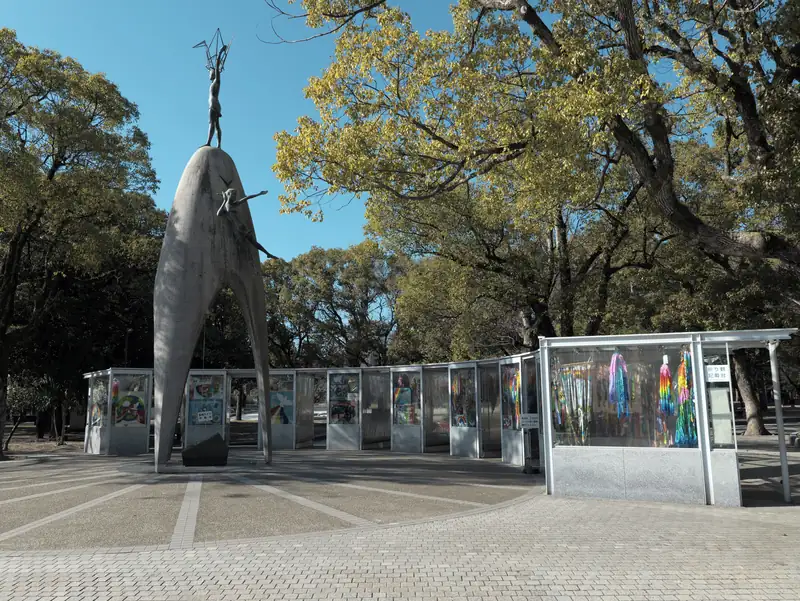
The Children’s Peace Monument was completed on 5 May 1958, Children’s Day in Japan. It is a 9 m bronze with a girl on top holding up a golden crane. The inscription on its base reads, in the official English: “This is our cry. This is our prayer. For building peace in this world.”
Cranes around the world
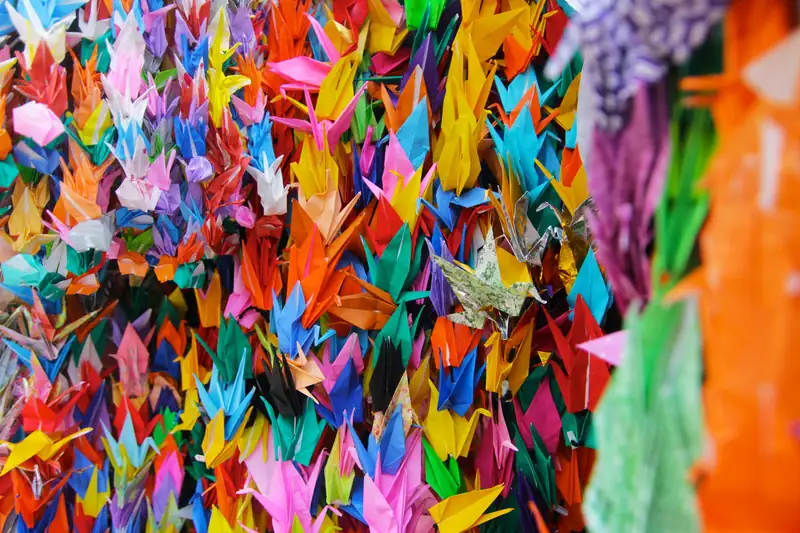
The cranes did not stay in Hiroshima. People began folding them in her memory, and they still do. About 10 million paper cranes are offered at the Children’s Peace Monument each year, according to the City of Hiroshima, from schools, groups and individuals in Japan and abroad. They hang in glass booths around the monument until the booths fill, and then the city moves them to storage.
Her family has also given some of her own cranes to places far from Hiroshima. In 2012 the Sadako Legacy group donated one to the US National Park Service, and it went on display at the Pearl Harbor Visitor Center in Hawaii in September 2013. In 2015, the 70th anniversary of the end of the Second World War, another was given to the Harry S. Truman Library and Museum in Missouri. The US National Archives describes that crane as about an inch tall, folded from a cellophane wrapper.
Visiting her memorial in Hiroshima
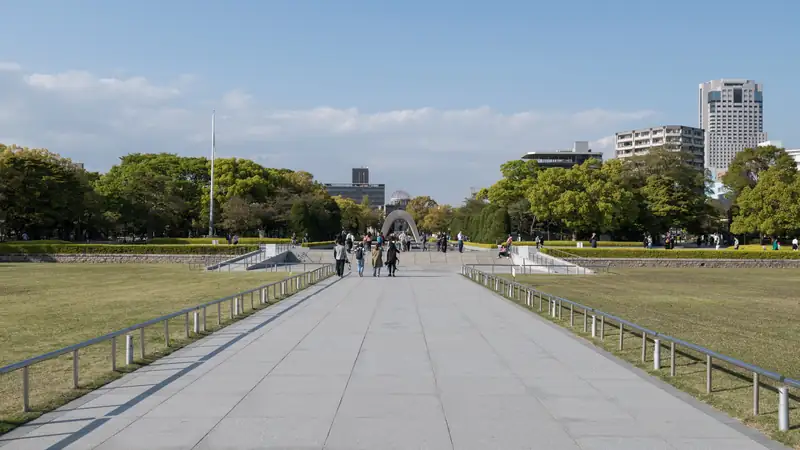
The Children’s Peace Monument stands in Peace Memorial Park, about 175 m from the Atomic Bomb Dome and a short walk north of the Cenotaph. Anyone can leave cranes there, tied in strings, in the booths around the base. If you fold cranes before you travel, the monument guide explains the size the city asks for and how to send them by post if you cannot come in person.
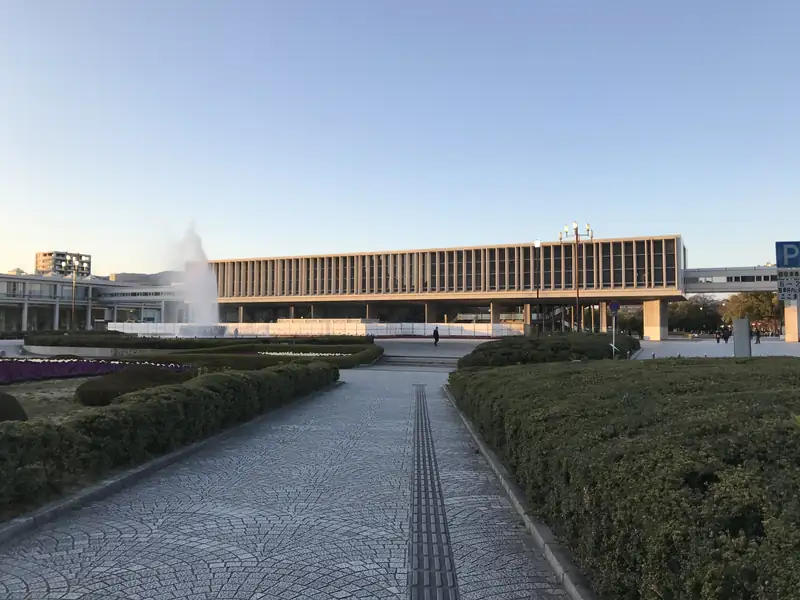
Inside the Peace Memorial Museum, the East Building lobby holds the monument’s original bell and golden crane. The museum’s collection includes some of the cranes Sadako folded.
How to talk about Sadako with children
Sadako’s story is about a child who was ill and kept hoping, and about her friends, who made sure she was remembered. Told plainly, it does not need frightening detail, which is why it suits younger children better than the museum’s exhibits. Folding a crane together before a visit, then leaving it in the booths at the monument, gives a child something to do and something to remember.